Hiking Through the Soul of the Canadian Rockies
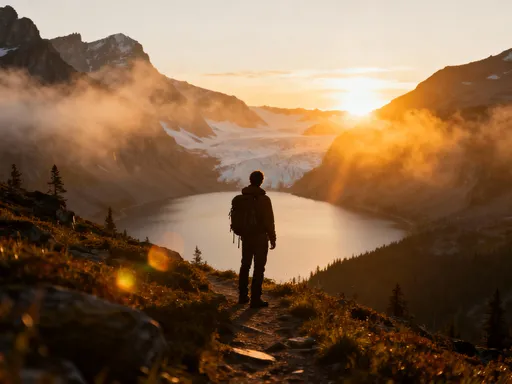
You know that feeling when nature speaks and you actually listen? That’s Banff on a trail. I didn’t just hike here—I connected. Between the crisp mountain air and the whispers of Indigenous stories etched into the land, every step felt deeper than sightseeing. This isn’t just about views (though they’re insane); it’s about cultural heartbeat, living history, and finding meaning where wilderness meets wisdom. In the Canadian Rockies, mountains aren’t just rock and ice—they’re ancestors, teachers, and keepers of memory. To walk here is to walk through time, through tradition, through a living relationship between people and place that has endured for thousands of years. This is not merely a destination for outdoor adventure; it is a sacred landscape that asks us to pause, to listen, and to journey inward as much as forward.
Why Banff Is More Than a Hiking Destination
Banff National Park, established in 1885, holds the distinction of being Canada’s first national park and a designated UNESCO World Heritage Site. Nestled within the majestic Canadian Rockies, it spans over 6,600 square kilometers of alpine terrain, glacial lakes, and ancient forests. While its postcard-perfect scenery draws millions each year, Banff’s true significance extends far beyond breathtaking vistas. It exists as a protected space not only for ecological preservation but also as a guardian of deep cultural heritage. The land on which Banff sits has been inhabited and revered for millennia by Indigenous peoples, particularly the Stoney Nakoda, Ktunaxa, and Secwépemc Nations. These communities have long maintained spiritual, historical, and subsistence ties to the region, navigating its valleys, hunting its slopes, and passing down stories that reflect a profound understanding of the natural world.
Understanding Banff as more than a scenic escape transforms the hiking experience from recreation to reverence. Every trail, river, and peak carries layers of meaning shaped by generations of human connection. For instance, the Bow Valley, now a popular corridor for hikers and cyclists, was once a vital travel route for Indigenous traders and families moving seasonally through the mountains. The peaks that rise like sentinels above the tree line are not just geological formations—they are beings with names, stories, and roles in creation traditions. Recognizing this shifts one’s perspective: hiking here becomes an act of acknowledgment, a quiet honoring of the enduring presence of the original stewards of the land.
When visitors understand that they are walking on ancestral territory, their relationship to the landscape deepens. It invites mindfulness, humility, and a sense of responsibility. Parks Canada, in collaboration with Indigenous partners, has increasingly emphasized this dual mission of conservation and cultural recognition. Interpretive signage, educational programs, and co-management initiatives reflect a growing commitment to integrating Indigenous knowledge into how the park is experienced and protected. This evolution encourages travelers to see Banff not as a commodity of natural beauty but as a living cultural landscape where nature and heritage are inseparable.
Choosing Trails with Cultural Depth
Selecting a hiking trail in Banff can be more than a decision based on difficulty or distance—it can be an intentional choice to engage with places of cultural resonance. Certain routes offer not only physical challenges but also opportunities to walk through areas rich in historical and spiritual significance. For example, trails near Mount Rundle, a towering presence overlooking the town of Banff, traverse lands long used by the Stoney Nakoda for gathering medicinal plants and holding ceremonies. The mountain itself is known by several Indigenous names, each reflecting its role in storytelling and seasonal navigation. While modern trailheads provide easy access, the deeper experience lies in understanding what these spaces have meant across generations.
Sulphur Mountain, accessible via the popular trail or gondola, also holds cultural importance. Long before it became a tourist destination, the mountain’s thermal springs were valued by Indigenous peoples for their healing properties. These waters were not exploited but respected as gifts, used in rituals and wellness practices that honored balance and reciprocity with nature. Today, hikers ascending the mountain’s switchbacks pass through ecosystems that have sustained life for centuries. Interpretive panels along the route now include references to these traditions, offering a glimpse into a worldview where health, spirituality, and environment are intertwined.
The Bow Valley corridor, stretching from Lake Louise to Canmore, has served as a natural highway for thousands of years. Archaeological evidence confirms human presence in the region dating back at least 10,000 years. Trails like the Johnston Canyon loop or the path along the Vermilion Lakes follow routes once traveled by Indigenous families during seasonal migrations. These paths were chosen not just for convenience but for their alignment with animal movements, water sources, and spiritual landmarks. When modern hikers walk them, they are retracing ancient footsteps—though few realize it. By learning the histories behind place names and landmarks, visitors can transform a casual stroll into a journey of recognition and respect.
Responsible trail selection also means understanding boundaries. Some areas within the park are culturally sensitive and may be closed to the public during certain times of the year to allow for traditional practices or ecological protection. Respecting these restrictions is not just about following rules—it is about acknowledging that some spaces are not meant for tourism. Carrying this awareness into every hike fosters a deeper, more ethical connection to the land.
The Spirit of the Land: Indigenous Perspectives on Nature
To understand the soul of the Canadian Rockies, one must listen to the voices that have lived in harmony with it for generations. Indigenous worldviews, particularly those of the Stoney Nakoda, Ktunaxa, and Secwépemc peoples, offer a fundamentally different relationship to nature than the dominant Western paradigm. In these traditions, mountains are not inert objects but living entities—elders who watch over the land. Rivers are not just water sources but ancestors who carry memory and life. Animals are not resources but relatives, each with a role in maintaining balance. This perspective is not symbolic; it is a lived reality that shapes how these communities interact with the environment.
Storytelling is central to passing down this knowledge. Oral histories, shared across generations, describe how the landscape was formed, why certain peaks are sacred, and how humans are meant to behave within the web of life. These narratives are not myths in the sense of fiction—they are teachings grounded in observation, experience, and spiritual understanding. On guided cultural hikes offered by Indigenous partners, visitors may hear stories of how the six glaciers visible from the Plain of Six Glaciers trail are believed to represent protective spirits, or how the changing colors of Lake Louise reflect the moods of the earth. These interpretations do not replace scientific explanations but enrich them, offering a layered understanding of place.
One of the most powerful shifts in perspective comes from seeing nature as teacher rather than backdrop. In Western tourism, the goal is often to capture the perfect photo or reach the summit. In Indigenous traditions, the goal is to learn, to listen, and to leave with greater understanding. A quiet moment by a stream might become a lesson in patience; a sudden storm might be seen as a reminder of humility. This way of being invites travelers to slow down, to observe, and to engage with the land on its own terms. It transforms the hike from a personal achievement into a reciprocal exchange.
Parks Canada and local Indigenous organizations have increasingly partnered to offer educational experiences that honor this worldview. From cultural talks at visitor centers to immersive guided walks led by Knowledge Keepers, these programs provide authentic opportunities for visitors to learn directly from the communities whose ancestors shaped the region’s identity. Participation in such activities is not just informative—it is an act of support for cultural preservation and self-determination.
What to Pack Beyond the Basics: A Mindset for Meaningful Travel
Every experienced hiker knows the essentials: sturdy boots, layered clothing, navigation tools, and bear spray. These items are non-negotiable for safety and comfort in the rugged terrain of the Canadian Rockies. Yet, equally important—though less tangible—are the intangible items one should carry: respect, curiosity, and a willingness to learn. Just as one would not hike without water, one should not enter sacred landscapes without a mindset aligned with responsibility and openness. This internal preparation is what turns a standard outdoor adventure into a journey of cultural and personal significance.
Before arriving in Banff, travelers can deepen their experience by researching the Indigenous nations connected to the land. Learning a few words in the Stoney language, understanding the significance of local place names, or reading about traditional land use practices can dramatically shift one’s perception of the environment. For example, knowing that Lake Louise was traditionally called “Lake of the Little Fishes” by the Nakoda people adds a layer of meaning to its shimmering waters. This kind of knowledge is not about performance; it is about building genuine appreciation and avoiding the trap of treating culture as decoration.
Supporting Indigenous-owned businesses and tour operators is another practical way to travel with integrity. Several local guides offer cultural hikes, storytelling sessions, and craft workshops that provide authentic insights while directly benefiting the community. These experiences are often smaller in scale and more personal than mass-market tours, allowing for deeper connection and mutual respect. Choosing them over generic alternatives is a conscious decision to prioritize ethical tourism and economic justice.
The Leave No Trace principles—pack it in, pack it out; stay on designated trails; respect wildlife—are well known among outdoor enthusiasts. But in culturally significant areas, these guidelines take on added weight. Disturbing even a small rock or plant in a sacred site can carry deep spiritual consequences. Similarly, drone use, loud music, or straying off trail in sensitive zones can disrupt both ecological and cultural integrity. Mindful behavior is not just about avoiding harm—it is about demonstrating care for a landscape that has cared for people for millennia.
Encounters That Change You: Moments Beyond the Summit
Some of the most transformative moments on the trail have nothing to do with elevation gain or panoramic views. They occur in quiet pauses—in the hush before dawn, in a shared story, in the sudden awareness that you are not just passing through but being welcomed. At sunrise over Lake Louise, when the first light paints the Victoria Glacier in rose gold, it’s easy to be overwhelmed by beauty. But when a guide softly explains that this lake was once a place of gathering, reflection, and sustenance for the Nakoda people, the moment deepens. The water is no longer just a mirror for the mountains; it becomes a mirror for history, for resilience, for continuity.
On the Plain of Six Glaciers trail, a ranger—himself a member of a local Indigenous community—once paused near a cluster of ancient pines and began to speak. He told a creation story in which the glaciers were seen as protectors, born from the tears of a mother who grieved for her people during a great flood. As he spoke, the wind stilled, and the ice fields above seemed to listen. Hikers who moments before had been focused on their breathing and footing now stood in silence, moved not by physical exertion but by emotional resonance. This was not entertainment; it was education rooted in identity and place. Such encounters do not happen on every hike, but when they do, they linger long after the blisters fade.
These experiences redefine what it means to “conquer” a trail. The summit is no longer the goal; understanding becomes the destination. A mother from Ontario, hiking with her teenage daughter, later shared that the story changed how she saw the mountains—not as challenges to overcome but as elders to be respected. For her, the hike became a lesson in intergenerational wisdom, one she planned to pass on. This is the power of meaningful travel: it doesn’t just show you new places; it shows you new ways of seeing.
Such moments are not guaranteed, but they are more likely when travelers approach the land with humility. They arise when we set aside the urge to dominate the landscape and instead open ourselves to its teachings. In these quiet revelations, the boundary between visitor and participant begins to dissolve, and the trail becomes a pathway not just through the mountains, but through the soul.
How to Travel Responsibly in Sacred Spaces
The popularity of Banff National Park brings both opportunity and challenge. On one hand, it allows millions to experience the majesty of the Rockies. On the other, it places immense pressure on fragile ecosystems and culturally significant sites. Overtourism—especially at iconic locations like Lake Louise, Moraine Lake, and Johnston Canyon—can lead to trail erosion, wildlife disruption, and the commodification of sacred spaces. The very places that inspire awe can become worn down by the weight of admiration. This is not a call to stop visiting, but a plea to visit differently—to come with care, with timing, and with intention.
One of the most effective ways to reduce impact is to travel during shoulder seasons—late spring or early fall—when crowds are thinner and the land has space to recover. These times of year offer their own magic: wildflowers in bloom, golden larch trees, fewer drones, and a deeper sense of solitude. Choosing less famous trails, such as those in the backcountry or lesser-known valleys, not only eases congestion but often leads to more profound experiences. Places like Egypt Lake or Skoki Valley may require more effort to reach, but they reward with untouched beauty and a stronger sense of connection.
Staying on designated trails is not just a rule—it is a form of respect. Many paths have been carefully planned to avoid disturbing archaeological sites, animal habitats, or ceremonial grounds. Venturing off trail, even to get a better photo, can cause lasting damage. Similarly, certain areas are closed to the public for cultural or ecological reasons. These restrictions are not arbitrary; they reflect ongoing stewardship by Indigenous communities and park authorities. Honoring them is part of traveling with integrity.
Supporting conservation efforts is another way to give back. Donations to organizations involved in land restoration, wildlife monitoring, or Indigenous-led stewardship programs help ensure the park’s long-term health. Volunteering for trail cleanups or participating in citizen science projects are hands-on ways to contribute. Responsible travel is not passive; it requires active engagement and a commitment to leaving things better than we found them.
Bringing It Home: Turning Hikes into Lasting Awareness
The true measure of a journey is not how many photos you take, but how it changes you. A hike in the Canadian Rockies has the power to do more than fill a camera roll—it can reshape your relationship with nature, with history, and with yourself. When you return home, the mountains may fade from view, but the lessons they offered need not. Carrying forward a deeper respect for Indigenous cultures, a heightened awareness of environmental fragility, and a renewed sense of humility can transform everyday life. You might find yourself pausing more, listening more, and acting with greater intention—not just on trails, but in your community.
Every trail is a story, and every mountain is a teacher. When we hike with this understanding, we stop seeing nature as something to conquer and start seeing it as something to learn from. The Stoney Nakoda, Ktunaxa, and Secwépemc peoples have lived this truth for generations. By honoring their presence, supporting their voices, and walking their ancestral lands with care, we become part of a larger narrative—one of respect, reciprocity, and renewal.
So the next time you lace up your boots, ask yourself: Are you hiking just for the view, or for the understanding? Let the land speak. Let it challenge you. Let it change you. Because in the silence between the peaks, there is wisdom waiting—and it’s been there all along.