Wandering Through Colombo: Where Old Meets New in Every Street View
Colombo isn’t just Sri Lanka’s bustling capital—it’s a living gallery of architectural tales. As I wandered its sunlit streets, I was struck by how colonial facades stand shoulder to shoulder with modern towers, and ancient temples peek between office buildings. This city doesn’t just grow; it evolves, layer by layer. Each corner tells a story of culture, conquest, and creativity. If you’ve ever wondered how a city can feel both historic and futuristic at once, Colombo holds the answer. It is not a place frozen in time, nor one that has erased its past in the name of progress. Instead, Colombo embraces continuity and change in equal measure, offering visitors a rare urban experience where heritage whispers from weathered walls and innovation gleams from glass-clad skyscrapers. For travelers seeking depth, texture, and authenticity, the city’s streets are an open invitation to slow down, look closely, and discover how architecture shapes memory and meaning.
The First Glimpse: Colombo’s Cityscape Through a Walker’s Eyes
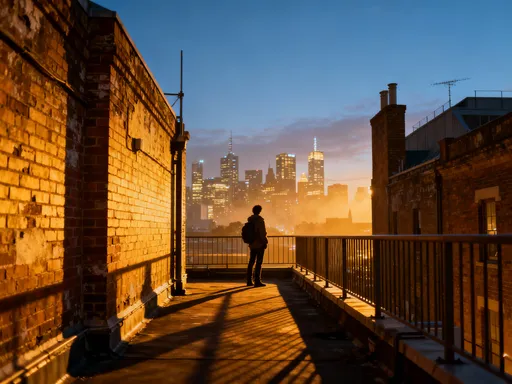
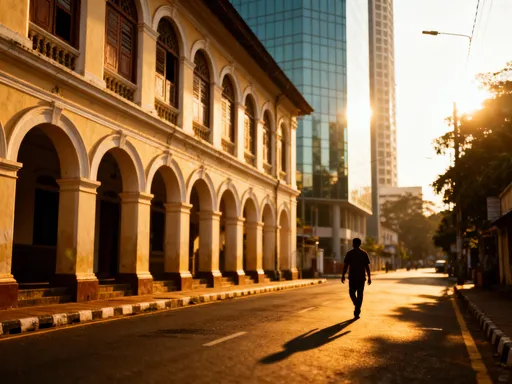
Walking into Colombo is like stepping into a layered narrative, where every building contributes a sentence to the city’s ongoing story. The first impression is one of contrast—sharp lines of steel and glass rise beside soft, sun-bleached walls from centuries past. In the Fort district, the modern skyline pulses with ambition, anchored by towers such as the Altair and the Lotus Tower, which reflect sunlight like mirrors against the Indian Ocean breeze. Yet just a few blocks away, low-rise colonial structures with shuttered windows and wooden balconies line quiet lanes, their paint gently peeling under tropical humidity.
This architectural duality is not accidental; it is the result of Colombo’s long and complex history as a trading hub, colonial capital, and now, a 21st-century metropolis. The city’s layout reflects waves of influence—from Portuguese traders in the 16th century, to Dutch engineers who shaped its canals, and British administrators who built grand civic buildings. Rather than erase these layers, Colombo has allowed them to coexist. A government office might occupy a 19th-century neoclassical structure while a new financial center rises nearby, symbolizing both continuity and transformation. This blend creates a visual rhythm that feels neither chaotic nor overly curated, but authentically lived-in.
For the observant traveler, the cityscape becomes a kind of map—a way to trace history through design. Arched doorways suggest European origins; sloping tiled roofs point to Dutch practicality in a rainy climate; wide verandas reflect the need for shade and ventilation in a tropical setting. These features are not preserved behind museum ropes but are part of daily life, housing banks, boutiques, and family-run businesses. As you walk, you begin to see Colombo not as a collection of buildings, but as a dynamic conversation between eras, where the past is not displayed but deeply embedded in the present.
Colonial Echoes: Dutch and British Footprints in Stone and Steel
The legacy of colonial rule remains visible throughout Colombo, particularly in neighborhoods such as Fort and Pettah, where the architectural language of Europe was adapted to the rhythms of South Asia. Dutch buildings from the 17th and 18th centuries often feature thick limestone walls, arched windows, and steeply pitched roofs designed to withstand monsoon rains. These structures were built for durability and utility, yet today they possess a quiet elegance that speaks to craftsmanship and resilience. One of the most striking examples is the Dutch Hospital, originally constructed in 1681 as a medical facility for Dutch East India Company officers. Now reimagined as a lifestyle and dining precinct, it retains its original vaulted ceilings and coral-stone walls while housing contemporary cafes and artisan shops.
British influence followed, leaving behind a different but equally enduring mark. The Old Parliament Building, completed in 1930, stands as a testament to colonial-era grandeur, combining neoclassical symmetry with tropical adaptations like shaded colonnades and louvered windows. Its sandstone façade glows in the late afternoon light, a reminder of an era when Colombo served as the administrative heart of British Ceylon. Nearby, the President’s House—formerly the Governor’s residence—boasts sprawling lawns and Palladian columns, embodying imperial authority through design. Yet today, these buildings are no longer symbols of foreign rule but part of Sri Lanka’s national identity, repurposed with care and pride.
What makes Colombo’s colonial architecture particularly compelling is how it has been integrated into modern life rather than preserved as static relics. A boutique hotel might occupy a restored merchant’s house, its courtyard now filled with the scent of jasmine and the clink of teacups. An old warehouse in Fort could house a design studio, its exposed beams and brickwork celebrated rather than hidden. This adaptive reuse reflects a deeper philosophy—one that values history not as something to be locked away, but as a living resource. It also demonstrates how preservation can be both practical and poetic, allowing the city to honor its past without being confined by it.
Sacred Spaces: Temples, Mosques, and Spiritual Architecture
Amid Colombo’s urban energy, places of worship offer moments of stillness and reflection, their architecture serving as both spiritual sanctuary and cultural landmark. The Gangaramaya Temple is perhaps the most iconic, located near Beira Lake and renowned not only for its religious significance but for its architectural eclecticism. Blending Thai, Indian, Chinese, and Sri Lankan styles, the temple complex is a visual feast: golden stupas rise toward the sky, intricately carved dragons guard entrances, and a large seated Buddha watches over the courtyard. Inside, visitors encounter a museum-like collection of artifacts—ivory sculptures, antique coins, and ceremonial masks—each contributing to a sense of accumulated wisdom across centuries.
Equally striking is the Jami Ul-Alfar Mosque, commonly known as the Red Mosque due to its bold red-and-white striped façade. Located in the bustling Pettah market district, it stands as a vibrant symbol of Colombo’s Muslim community. Built in 1909, its Indo-Saracenic design features onion domes, horseshoe arches, and minarets topped with crescent moons, blending Mughal and Gothic elements in a way that feels both grand and welcoming. Despite the noise and congestion of the surrounding bazaars, the mosque exudes a sense of serenity, especially during prayer times when the call to worship echoes over the rooftops.
Other spiritual sites, such as the Sri Kailawasanathan Temple and the St. Anthony’s Shrine, further illustrate the city’s religious diversity. These spaces are not tucked away in quiet corners but are woven into the fabric of everyday life. Devotees in saris and business suits alike pause at shrines on their way to work; incense smoke mingles with the scent of street food; children leave flower offerings before school. This integration of faith into public space reveals a fundamental truth about Colombo: spirituality is not separate from the city’s identity but central to it. The architecture of these sacred sites—ornate, colorful, deeply symbolic—acts as a visual anchor, reminding residents and visitors alike of values beyond commerce and convenience.
Modern Ambitions: Glass Towers and Urban Renewal
In the last two decades, Colombo has undergone a dramatic transformation, marked by the rise of sleek high-rises and large-scale urban development projects. The most ambitious of these is the Colombo International Financial City, also known as Port City, an artificial extension of land reclaimed from the Indian Ocean. Designed as a hub for global business, it features master-planned districts with modern infrastructure, luxury residences, and commercial towers built to international standards. When completed, it will add over 269 hectares to the city’s footprint, symbolizing Sri Lanka’s aspirations to become a regional financial center.
Yet this modernization is not limited to Port City. Across Colombo, new buildings are redefining the skyline. The Altair residential towers, designed by renowned architect Zaha Hadid, twist skyward in a fluid, sculptural form, their reflective surfaces shifting with the light. The Lotus Tower, standing at 356 meters, serves both as a telecommunications hub and an observation deck, offering panoramic views of the city and coastline. These structures represent more than architectural innovation—they signal confidence, resilience, and a forward-looking vision for the nation’s future.
Importantly, many of these modern developments are incorporating sustainable design principles. Energy-efficient glass reduces solar heat gain, green roofs help regulate temperature, and rainwater harvesting systems are becoming standard in new constructions. Some buildings even integrate traditional elements—such as courtyards and natural ventilation—into contemporary designs, creating a bridge between old and new. While concerns about gentrification and the loss of character are valid, the city’s planners appear increasingly aware of the need for balance. The goal is not to replace Colombo’s soul but to expand it, ensuring that growth enhances rather than erases the city’s unique identity.
Hidden Layers: Neighborhood Gems Beyond the Center
While the Fort and Pettah districts capture much of the attention, Colombo’s quieter neighborhoods reveal a more intimate side of the city’s architectural character. Cinnamon Gardens, developed during the British colonial period as an elite residential enclave, remains one of the most picturesque areas. Tree-lined avenues lead to colonial bungalows with wide verandas, latticed windows, and gardens overflowing with frangipani and hibiscus. Many of these homes now serve as embassies, cultural centers, or boutique hotels, their preservation a quiet act of respect for craftsmanship and history.
Further out, neighborhoods like Bambalapitiya, Wellawatte, and Ratmalana offer a different kind of beauty—one rooted in function, community, and resilience. Here, homes are more modest, often built with concrete and corrugated metal, yet they are far from plain. Brightly painted doors, potted plants on balconies, and handcrafted grilles reflect personal pride and creativity. These areas may lack the grandeur of colonial landmarks, but they possess a warmth and authenticity that is deeply moving. They are places where families gather on porches in the evening, where children play cricket in open lots, and where daily life unfolds without spectacle but with dignity.
Exploring these residential zones offers a crucial perspective: Colombo is not just a city of monuments and skylines, but of homes and neighborhoods where people live, love, and build lives. The architecture here may not make international design magazines, but it tells stories of adaptation, resourcefulness, and belonging. It reminds us that urban beauty is not only found in grand facades but in the details—the way sunlight falls on a tiled roof, the sound of a door creaking open, the scent of curry drifting from a kitchen window. These are the quiet moments that make a city feel like home.
The Street as a Canvas: Markets, Graffiti, and Urban Texture
Architecture in Colombo extends beyond buildings—it is also shaped by how people inhabit and transform public space. Nowhere is this more evident than in Pettah Market, a sprawling network of narrow lanes and covered walkways that pulse with commerce and color. Here, corrugated metal roofs form a patchwork canopy overhead, shielding vendors and shoppers from sun and rain. Stalls overflow with spices in golden mounds, bolts of silk in every hue, and electronic gadgets piled high. The air hums with barter, prayer calls, and the occasional honk of a three-wheeler squeezing through the crowd.
This informal architecture—improvised, functional, vibrant—is as much a part of Colombo’s identity as its grand landmarks. The market’s layout has evolved organically, shaped by generations of trade and community needs. There are no strict zoning laws here, no master plans—just a living, breathing ecosystem of commerce and culture. Yet within this apparent chaos lies a kind of order: each lane specializes in a particular trade—gold, textiles, hardware—creating a navigable rhythm for those who know it. For visitors, it can be overwhelming, but also exhilarating, offering a raw, unfiltered encounter with the city’s energy.
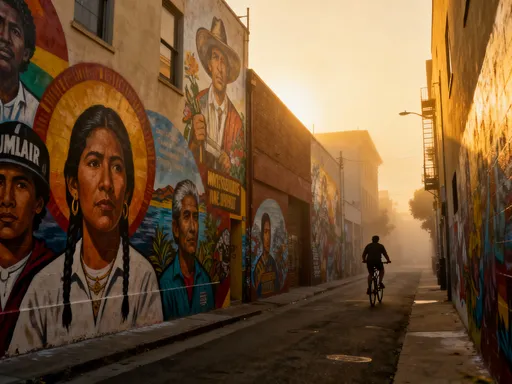
In recent years, another form of urban expression has begun to emerge: street art. Though still in its early stages, murals are appearing on blank walls across Colombo, often depicting cultural icons, nature scenes, or social messages. Some are commissioned, others spontaneous, but all add a layer of creativity to the city’s visual landscape. Unlike the formal architecture of temples and towers, this art is temporary, evolving, and deeply democratic. It reflects the voices of a new generation, one that sees the city not just as a place of heritage and commerce, but as a canvas for imagination and change.
Wandering with Purpose: How to Experience Colombo’s Architecture Like a Local
To truly appreciate Colombo’s architectural richness, one must move slowly and with intention. The city reveals itself best on foot, where the pace allows for observation, reflection, and unexpected discoveries. Begin at Galle Face Green, the oceanfront promenade where families gather at sunset and kites dance in the breeze. From there, walk south into the Fort district, where colonial buildings stand alongside modern offices. Notice the details—the ironwork on a balcony, the pattern of tiles on a floor, the way light filters through a stained-glass transom.
Then, dive into Pettah, where the sensory experience intensifies. Let yourself get momentarily lost in its alleys, pausing to sip a glass of king coconut water or bargain for a handwoven basket. Later, stroll through Cinnamon Gardens, where the air is quieter and the trees form a green canopy overhead. Visit the National Museum or Seema Malaka, a serene Buddhist meditation hall floating on Beira Lake, its simplicity a counterpoint to the ornate temples elsewhere.
Comfortable walking shoes, a reusable water bottle, and a curious mind are the only essentials. A guided heritage walk can deepen understanding, offering historical context and access to hidden courtyards or rooftops. But even unguided exploration has value—there is wisdom in getting lost, in asking a shopkeeper for directions, in sharing a smile with a stranger. The goal is not to check off landmarks but to feel the city’s pulse through its architecture. In Colombo, every wall, window, and street corner holds a story. To walk here is not just to travel through space, but through time, culture, and the quiet beauty of human resilience.