You Won’t Believe What This Place Hides in Plain Sight
Nestled in the heart of Turkey’s Cappadocia region, Göreme isn’t just another stop on the map—it’s a gateway to another world. Towering fairy chimneys, ancient cave dwellings, and sweeping valleys carved by time make this place feel like something out of a dream. I went expecting beauty, but what I found was deeper: silence that calms the soul, trails that whisper history, and landscapes that shift with the light. This is nature reimagined—raw, rare, and real. Few destinations offer such a seamless blend of geological wonder, cultural endurance, and spiritual quiet. Göreme does not shout; it murmurs, inviting those who listen to step closer and discover what lies beneath the surface.
Discovering Göreme: More Than Just a Pretty Postcard
Göreme is often celebrated for its surreal skyline, where spires of rock rise like sentinels from the earth, but its significance extends far beyond visual appeal. Located in central Anatolia, this region was shaped over 60 million years ago by volcanic eruptions from Mount Erciyes and Mount Hasan. Layers of lava, ash, and tuff—a soft volcanic rock—settled across the landscape, only to be sculpted over millennia by wind and water into the fantastical formations seen today. These natural sculptures, known locally as “fairy chimneys,” are not only striking in appearance but also remarkably durable, allowing human civilizations to carve homes, places of worship, and even entire underground cities into their porous interiors.
What sets Göreme apart from other geological marvels is its uninterrupted continuity of human habitation. The area became a refuge for early Christians fleeing persecution during the Roman Empire, who recognized the soft rock as both shelter and sanctuary. They carved intricate churches adorned with faded frescoes into cliff faces, preserving their faith in stone. Today, Göreme National Park and the Rock Sites of Cappadocia are protected as a UNESCO World Heritage Site, recognized not only for their natural beauty but also for their cultural depth. This dual designation underscores a rare harmony between nature and human history—where the land itself tells a story of survival, adaptation, and reverence.
While many travelers arrive drawn by the iconic hot air balloons that float above at dawn, the true essence of Göreme reveals itself slowly, quietly, and often unexpectedly. It’s in the way sunlight filters through a narrow canyon at midday, or how a hidden chapel emerges around a bend in the trail. The surface beauty is undeniable, but beneath it lies a layered narrative of resilience and quiet ingenuity. To experience Göreme fully is to look beyond the postcard and engage with the slow rhythm of a place shaped equally by time and human hands.
The Valleys That Take Your Breath Away—And Your Hiking Boots Off
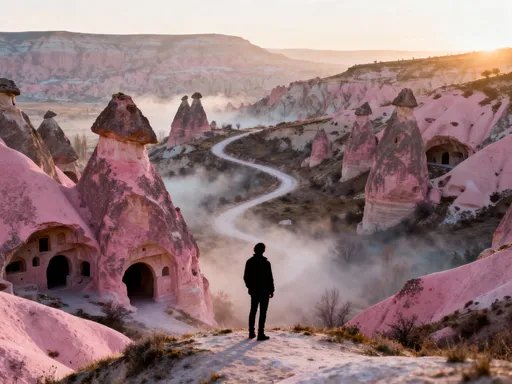
Among Göreme’s most captivating features are its valleys, each with its own character, color, and energy. Hiking through them is less like walking a trail and more like journeying through an open-air museum of natural artistry. Rose Valley, named for the warm pink and peach hues that glow at sunset, offers a network of winding paths flanked by towering rock cones and honeycombed cliffs. The soft light during late afternoon transforms the entire valley into a golden sanctuary, making it one of the most photogenic—and peaceful—times to explore. The main trail connects Göreme to the village of Cavusin, passing ancient cave dwellings and secluded chapels tucked into alcoves, some still bearing traces of painted saints.
Red Valley, so called for its deep rust-colored strata, is best visited during sunrise when the rising sun sets the rocks ablaze in fiery tones. This valley is part of a longer loop popular among hikers, offering panoramic views and dramatic rock formations shaped by centuries of erosion. Unlike more commercialized trails, much of Red Valley remains unmarked, requiring a good map or local guidance to navigate safely. Sturdy footwear is essential, as the terrain can be uneven, with loose gravel and steep inclines. Yet, the effort is rewarded with solitude and sweeping vistas that stretch across the Cappadocian plateau.
Love Valley, despite its modern name, is rooted in natural symbolism—the phallic-shaped rock formations that rise from the earth have long been associated with fertility in local folklore. While the name draws attention, the real value lies in the valley’s role as a crossroads of hiking routes and historical paths. Pigeon Valley, stretching between Göreme and Uçhisar, is named for the countless pigeon houses carved into its cliffs. For centuries, local farmers relied on these birds for fertilizer and messages, and the hand-carved niches remain as a testament to rural ingenuity. Walking this trail at dusk offers a serene experience, with doves returning to their roosts in synchronized waves against the fading sky.
Each valley presents a different facet of Cappadocia’s geological and cultural tapestry. To hike them is to engage all the senses—the crunch of volcanic gravel underfoot, the scent of wild thyme in the air, the cool shade of an overhanging rock. For those seeking authenticity over spectacle, these trails offer a chance to move at nature’s pace, away from the crowds gathering for balloon launches. Early mornings or late afternoons are ideal, not only for light but also for tranquility. With proper preparation—water, sun protection, and comfortable shoes—these walks become more than exercise; they become pilgrimages through time and terrain.
Cave Life: Where Nature and History Share the Same Walls
In Göreme, the boundary between nature and human history is not just blurred—it is erased. The soft tuff rock that defines the landscape also made it possible for people to live within the earth itself. For centuries, communities carved entire settlements into the hillsides, creating multi-level homes, storage rooms, stables, and even communal spaces. These cave dwellings were not primitive shelters but carefully designed homes, naturally insulated against the region’s extreme temperatures—cool in summer, warm in winter. Many of these structures remain in use today, some converted into boutique hotels or family homes, preserving a way of life that has endured for generations.
More profound are the rock-cut churches scattered throughout the region, particularly within the Göreme Open-Air Museum, a UNESCO-protected site that draws visitors from around the world. These small chapels, carved directly into the rock, feature domed ceilings and arched doorways, their walls once covered in vibrant frescoes depicting biblical scenes. Though centuries of exposure have faded many paintings, enough remains to convey their original spiritual intensity. The Dark Church, so named because it was kept dim to preserve the artwork, still displays remarkably detailed depictions of Christ, the Virgin Mary, and the apostles in hues of ochre, green, and deep red. These were not grand cathedrals but intimate spaces of devotion, where early Christians gathered in secrecy and faith.
Beyond the surface, Göreme’s underground cities offer an even deeper glimpse into human resilience. While not located within Göreme itself, nearby sites like Derinkuyu and Kaymaklı are integral to understanding the region’s history. These vast subterranean complexes extend dozens of meters below ground, with ventilation shafts, water wells, rolling stone doors, and communal rooms capable of housing thousands. Built as refuges during times of invasion, they speak to a culture that learned to live beneath the earth to survive above it. Though only a fraction is open to the public, walking through these cool, narrow corridors is a humbling experience—an encounter with a past shaped by both danger and ingenuity.
What makes these spaces so powerful is not just their age but their continuity. Unlike ruins frozen in time, many cave homes in Göreme are still lived in, their interiors updated with modern comforts while retaining their original structure. This seamless blend of ancient and contemporary life challenges the notion that history must be preserved behind glass. Here, it is lived, breathed, and passed down. To stay in a cave hotel is not just a novelty—it is to participate, however briefly, in a tradition of harmony between people and the land they inhabit.
Sunrise, Sunset, and Everything in Between: Chasing Light in Göreme
In Göreme, light is not just illumination—it is a living force that transforms the landscape hour by hour. At dawn, the first rays creep across the valley floors, slowly gilding the tips of fairy chimneys in soft gold. By mid-morning, the sun lifts higher, casting sharp shadows that emphasize the texture of the rock—every groove, crack, and overhang thrown into relief. As afternoon fades into evening, the rocks warm to deep oranges and reds, culminating in a sunset that feels almost theatrical in its brilliance. This daily cycle is not merely beautiful; it shapes the entire experience of visiting, dictating when and where to go for the most profound impressions.
Sunrise is Göreme’s most famous moment, largely due to the hot air balloon rides that launch in synchronized waves from the valley edges. Hundreds of colorful balloons rise together, floating silently above the surreal terrain as the world wakes below. While the balloons have become a symbol of Cappadocia, they are best appreciated not as a spectacle alone but as part of a broader sensory experience. Watching them from the ground—from a quiet hillside or a terrace café—can be just as moving as riding in one. The stillness of the early morning, broken only by the occasional burst of flame from a balloon’s burner, creates a meditative atmosphere unmatched at any other time of day.
Sunset offers a different kind of magic. The best vantage points—such as the hilltop near Göreme Castle or the trails in Red Valley—fill with photographers and wanderers seeking that perfect glow. But beyond photography, there is an emotional resonance in watching the land change before your eyes. The fading light softens edges, blurs distances, and bathes everything in a warm, nostalgic hue. It’s a time for reflection, for sitting quietly and letting the day settle. For those who prefer stillness over crowds, a solitary walk through Pigeon Valley at dusk offers a more intimate connection with the landscape.
Yet, the magic of light in Göreme is not confined to sunrise and sunset. Midday, often avoided for its harsh sun, reveals details invisible in softer light—the intricate patterns of erosion, the way shadows define ancient doorways, the texture of centuries-old carvings. Cloudy days, though less celebrated, can be equally striking, muting colors and creating a dreamlike, almost monochrome atmosphere. To truly know Göreme is to experience it across all its moods, understanding that each moment offers a different version of the same extraordinary place. Timing your visit around the sun’s journey doesn’t just improve photographs—it deepens understanding.
Hidden Trails and Local Secrets: Going Beyond the Tourist Map
While the main trails and viewpoints of Göreme are rightly celebrated, some of the most memorable experiences lie off the beaten path. Away from the guided tours and crowded overlooks, quiet trails wind through lesser-known valleys, connecting small villages and forgotten chapels. One such route leads from Çavuşin to the Church of St. John the Baptist, a modest but beautifully preserved rock-cut church perched on a hillside. The path passes abandoned cave homes and terraced gardens, offering glimpses into a rural life that persists despite increasing tourism. Another hidden gem is the trail from Uçhisar to Pigeon Valley, which climbs through a narrow gorge before opening into a wide expanse of undisturbed rock formations.
Discovering these places often requires more than a map—it requires connection. Local guides, many of whom grew up in the region, carry knowledge that no brochure can capture. They know which paths are safe after rain, where wildflowers bloom in spring, and which caves once served as shepherd shelters. Staying in family-run guesthouses enhances this access; hosts often share personal stories, recommend quiet picnic spots, or point out stars in the night sky from their terraces. These moments of human connection transform a visit from sightseeing into storytelling.
Slow travel is the key to unlocking Göreme’s quieter side. Rushing from balloon ride to museum to souvenir shop may check boxes, but it misses the essence of the place. Spending extra days, walking without a strict schedule, and allowing for unplanned detours lead to unexpected discoveries—a hidden fresco, a cool cave chapel, a shared tea with a local farmer. This approach not only enriches the traveler’s experience but also supports sustainable tourism. When visitors linger, they spend more in small businesses, reduce pressure on popular sites, and develop a deeper respect for the place they’re visiting.
The value of these hidden experiences is not just in their rarity but in their authenticity. They remind us that travel is not about collecting landmarks but about cultivating presence. In Göreme, where time feels both ancient and immediate, slowing down becomes a form of reverence—a way of honoring the land and its people by truly seeing them.
Responsible Travel in a Fragile Wonderland
Göreme’s beauty is undeniable, but it is also fragile. The same soft rock that allows for breathtaking carvings and delicate formations is vulnerable to erosion, weathering, and human impact. Foot traffic, unregulated development, and littering threaten the ecological balance of the region. Trails that once saw only shepherds now bear the marks of thousands of hikers each year. In response, local authorities and conservation groups have implemented measures to protect the landscape, including marked paths, restricted access to sensitive areas, and educational signage in multiple languages.
Travelers play a crucial role in preserving this wonder. Staying on designated trails prevents soil erosion and protects ancient carvings from accidental damage. Touching frescoes or carving names into cave walls—though rare—is still a concern, and visitors should remember that these sites are not just art but sacred spaces with deep historical meaning. Carrying reusable water bottles and packing out trash helps keep valleys clean and reduces plastic waste in a region where waste management infrastructure is limited.
Supporting eco-conscious businesses is another way to travel responsibly. Many family-run hotels now use solar energy, collect rainwater, and serve locally sourced meals. Choosing these accommodations not only reduces environmental impact but also ensures that tourism benefits the local community directly. Likewise, hiring local guides, buying handmade crafts, and dining at small restaurants keep income within the region, fostering economic sustainability alongside environmental care.
Responsible travel is not about restriction—it is about respect. It means recognizing that Göreme is not just a backdrop for photographs but a living landscape shaped by nature and nurtured by people. By traveling mindfully, visitors help ensure that future generations can experience its quiet magic just as profoundly as we do today.
Why Göreme Stays With You Long After You Leave
Most destinations fade from memory, their images stored in albums or forgotten in cloud folders. Göreme is different. It lingers—in dreams, in quiet moments, in the way you notice light differently upon returning home. It’s not just the visuals that endure, but the feeling: a sense of stillness, of timelessness, of being small within something vast. This emotional imprint comes from the rare convergence of natural wonder, human history, and sensory depth. In Göreme, you don’t just see beauty—you feel it in your feet as you walk ancient paths, in your breath as you stand before a thousand-year-old fresco, in your spirit as you watch the sun rise over a sea of balloons.
Many visitors describe a subtle transformation—a quieting of the mind, a slowing of pace, a renewed appreciation for simplicity. In a world of constant noise and motion, Göreme offers a rare counterbalance: a place where silence is not empty but full of meaning. It reminds us that the earth is not just a resource but a storyteller, and that time, when given space, creates wonders beyond imagination. To walk through its valleys is to walk through layers of history, geology, and human courage.
Ultimately, Göreme is more than a destination. It is a reminder of what our planet can achieve when left to the slow artistry of nature and the quiet resilience of people. It invites not just visitation, but reflection. It asks us to look closely, to move slowly, to listen. And in doing so, it leaves an imprint not on the land—but on the heart. For those willing to step beyond the postcard, Göreme offers not just a journey across terrain, but a journey inward—one that lasts long after the flight home.